Overview
- Genre: Souls-like Action RPG
- Team Size: 17
- Platforms: PC
- Engine: Unreal Engine 5.4
- Role: Level Designer
Official Gameplay Trailer
Level 01 - Strangled Forest
Summary
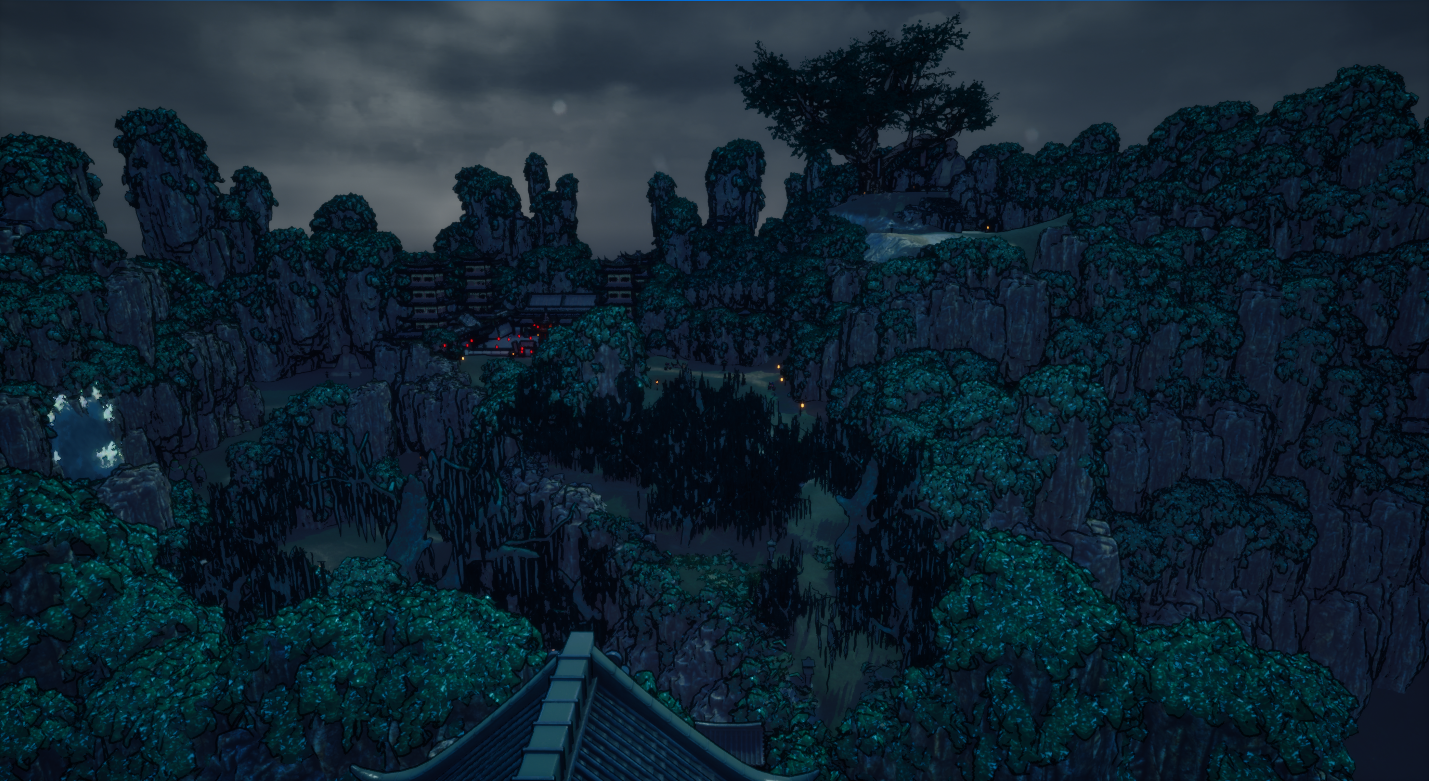
Featured in Skelemental: Monk's Fury's official gameplay trailer, this flagship level was also my first for the project. It set the tone for the game's encounter design and overall feel.
Design Goals
Interconnected Looped Paths: The level is built around a loop structure with shortcut paths that unlock progressively as the player clears combat encounters, rewarding mastery and reducing friction on repeat runs.
Environmental Storytelling: The world communicates direction and history without explicit signposting. Directional lighting, carefully placed landmarks, and vistas that overlook the broader map work together to orient the player and reinforce the setting's narrative.
Exploration: Off the critical path, side areas offer rewards and lore for curious players, adding depth and replayability without disrupting the main flow.
Player Flow & Pacing: Combat encounter placement, interactable objects, and item drops are sequenced deliberately to control rhythm building tension, offering release, and guiding the player forward through feel rather than instruction.
Process
2D Level Layout (version 1)
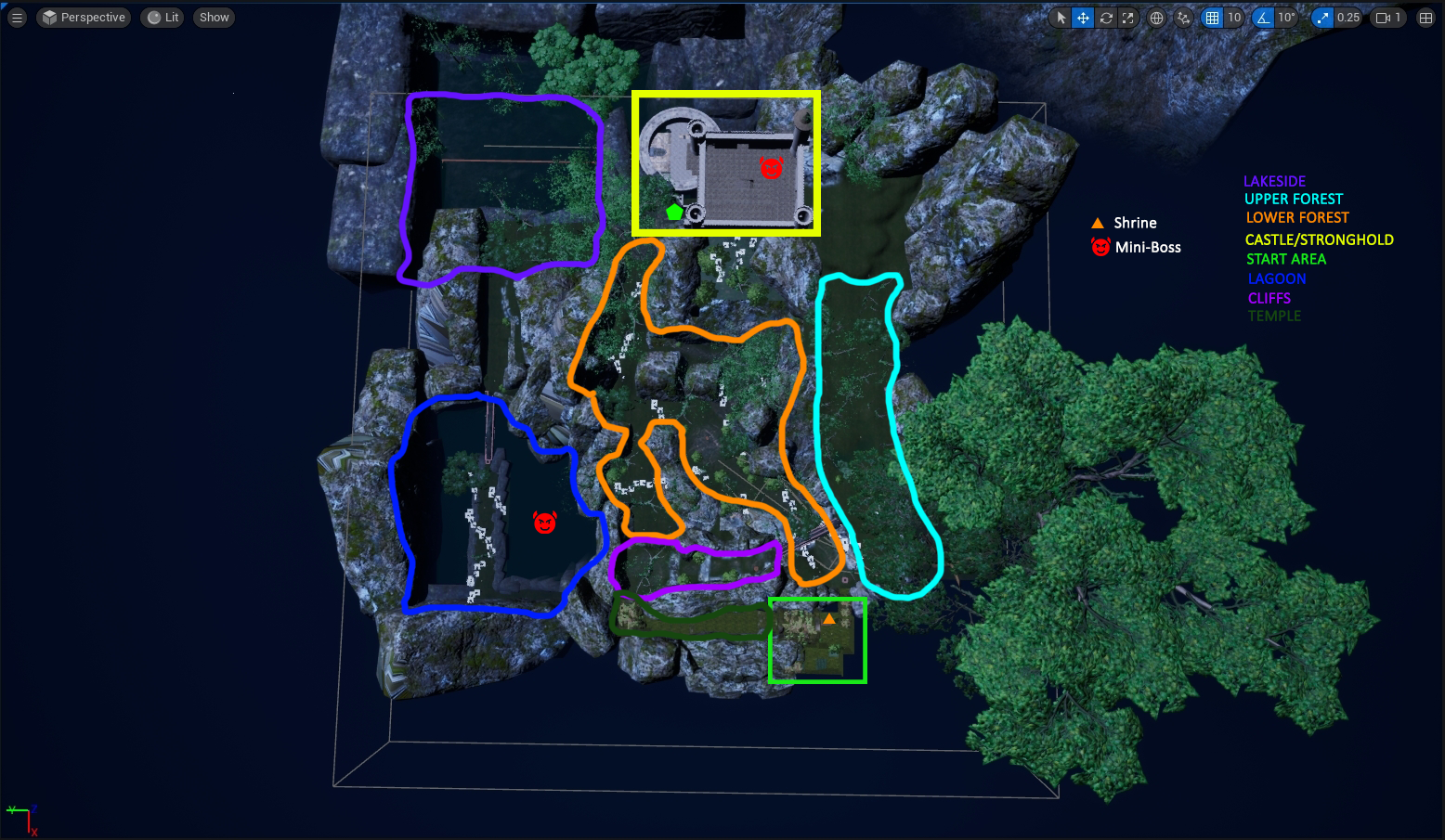
When I joined the team in June 2025, the Strangled Forest was roughly 20% complete, a largely empty space with potential but no cohesive structure. My task was to take that shell and build it into a fully realized, interconnected soulslike level from the ground up.
My first step was establishing a clear layout foundation. I captured an overhead screenshot directly from the engine and brought it into Photoshop, using it as a base to zone out distinct areas of the level, mapping what I wanted each section to accomplish in terms of combat, exploration, and pacing. From there, I collaborated closely with the lead designer to evaluate what served the experience and what to cut. Out of those early conversations, we aligned on a target playtime of 45 to 90 minutes, which became the guiding constraint for every layout and encounter design that followed.
With the zones established, I moved into individual layout design, creating dedicated maps for each zone to capture finer detail and ensure clarity across the team during implementation.
Pictured here is the detailed layout for the Upper Forest zone. This map breaks the zone down into its own sub-areas, and includes a detailed outlining intended enemy placement, interactable objects, and special events, giving both designers and collaborating disciplines a clear reference for what each space should feel and function like.
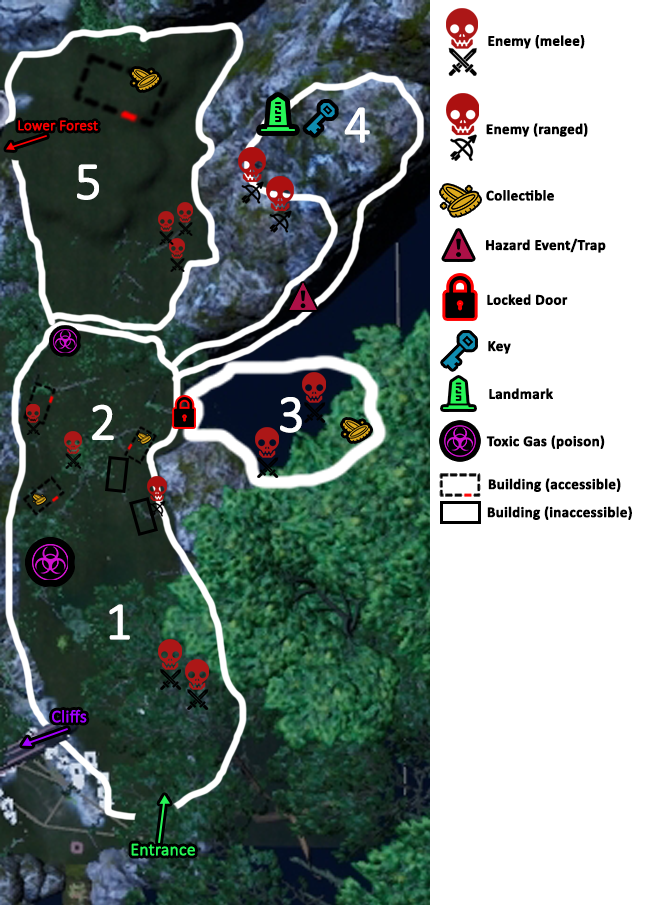
2D Level Layout (Upper Forest Zone)
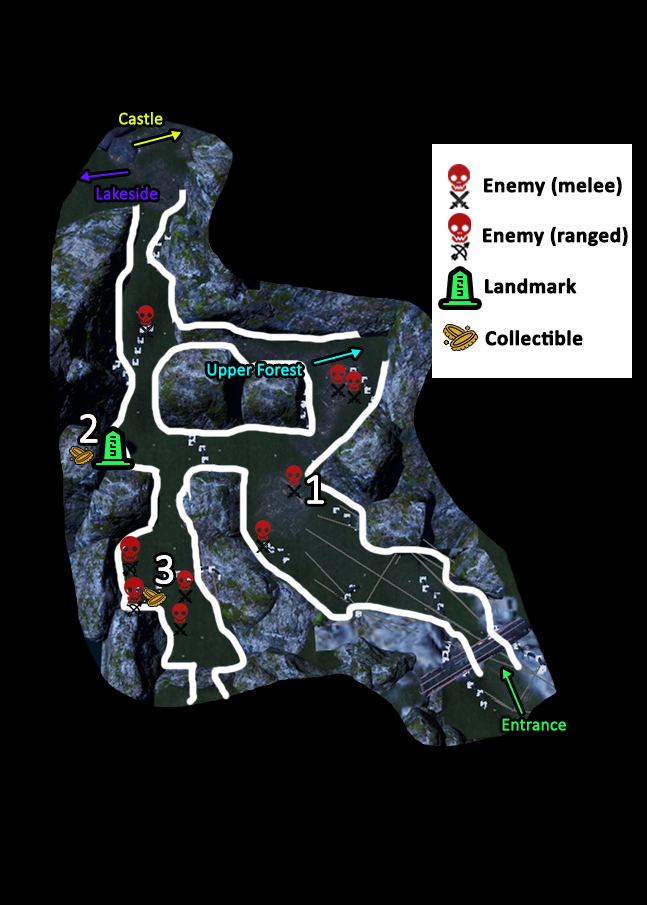
2D Level Layout (Lower Forest Zone)
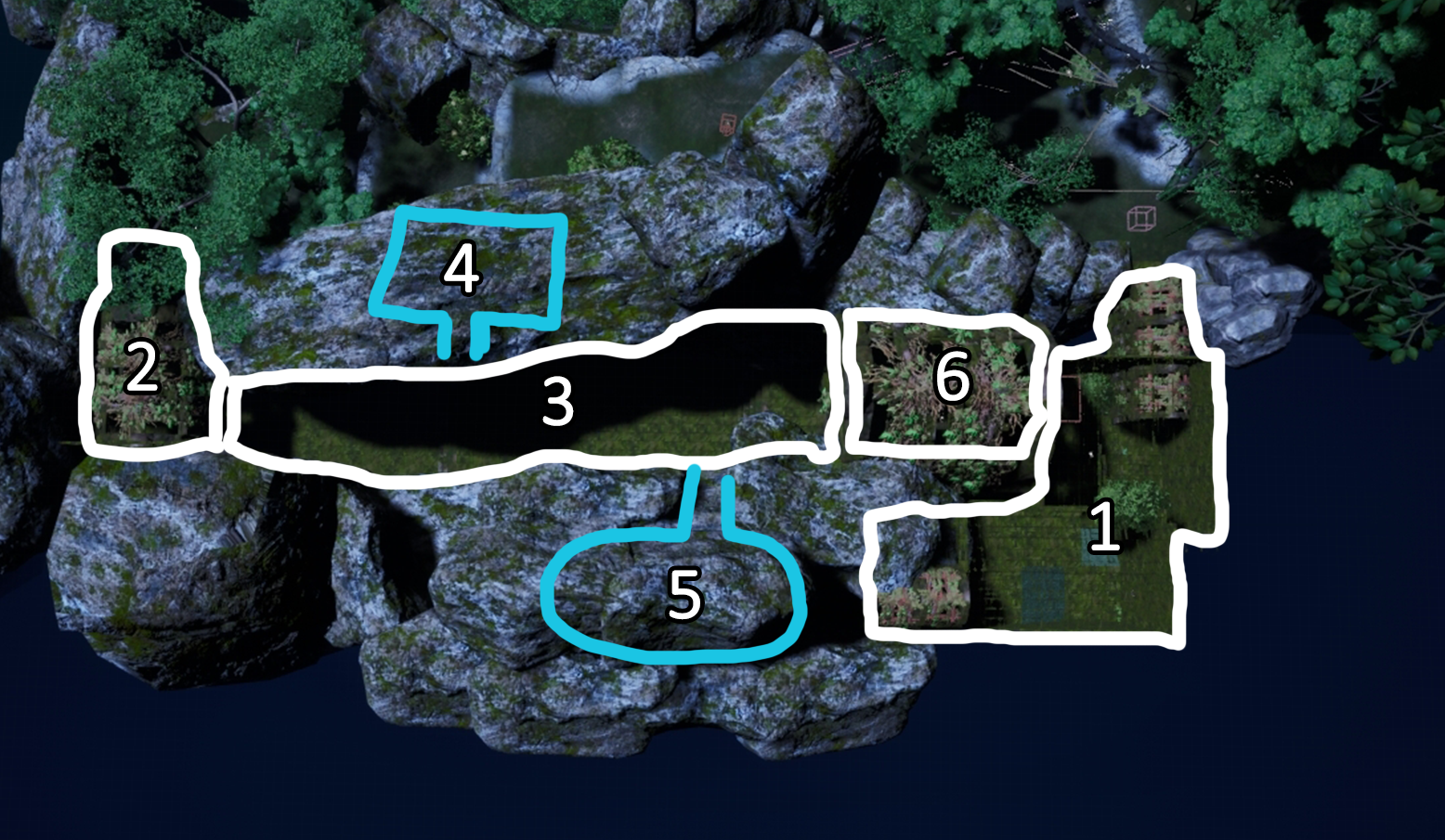
2D Level Layout (Upper Temple Zone)
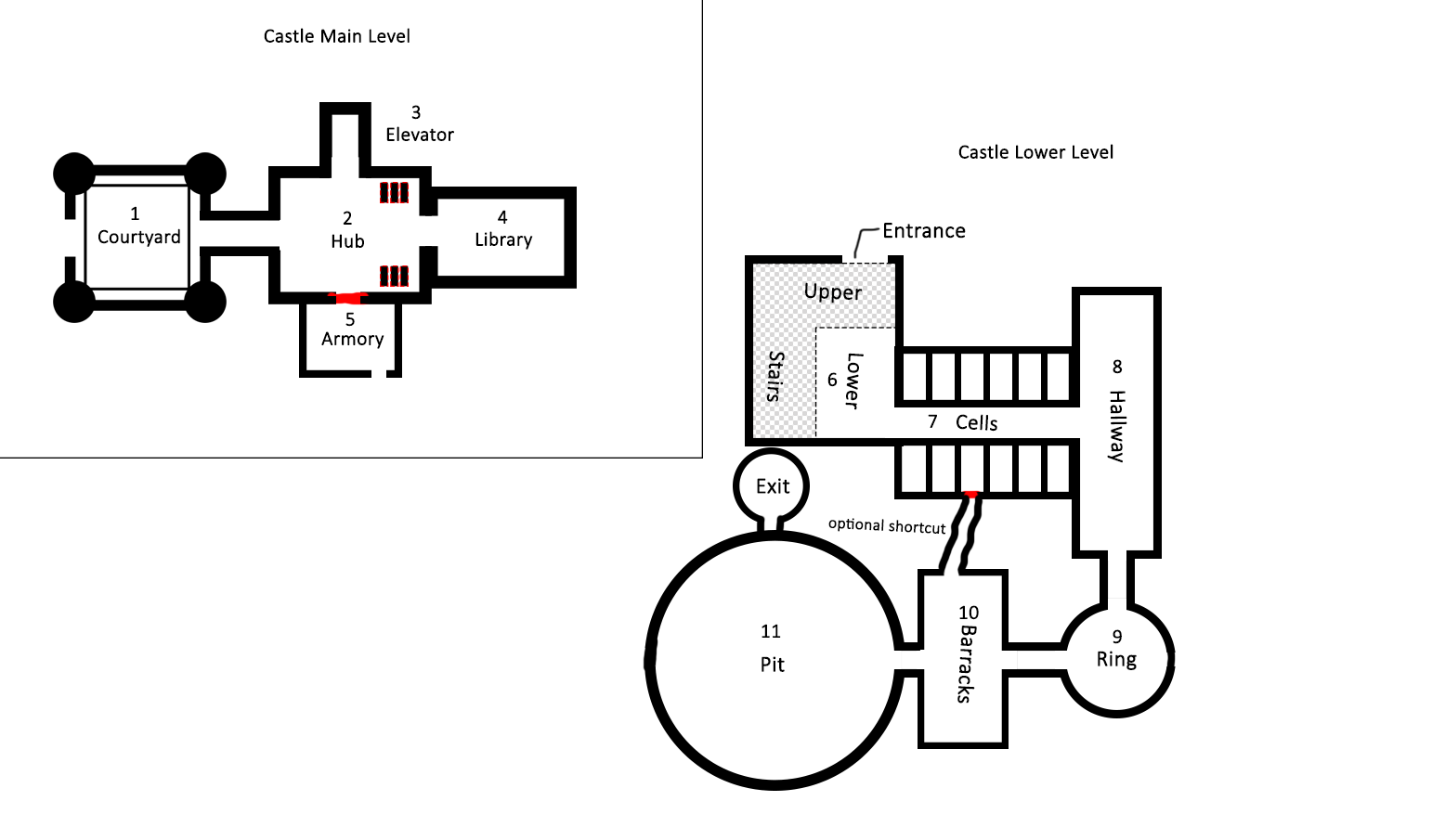
2D Level Layout (Castle Zone)
These layouts represented the first iteration of the Strangled Forest creating a starting point, not a final answer. As the narrative took shape, certain areas of the level required redesigning to stay aligned with the evolving story. At the same time, every decision had to be weighed against the realities of the project: available art assets, mechanical constraints, and performance targets. Iteration wasn't just about making the level better, it was about making it achievable.
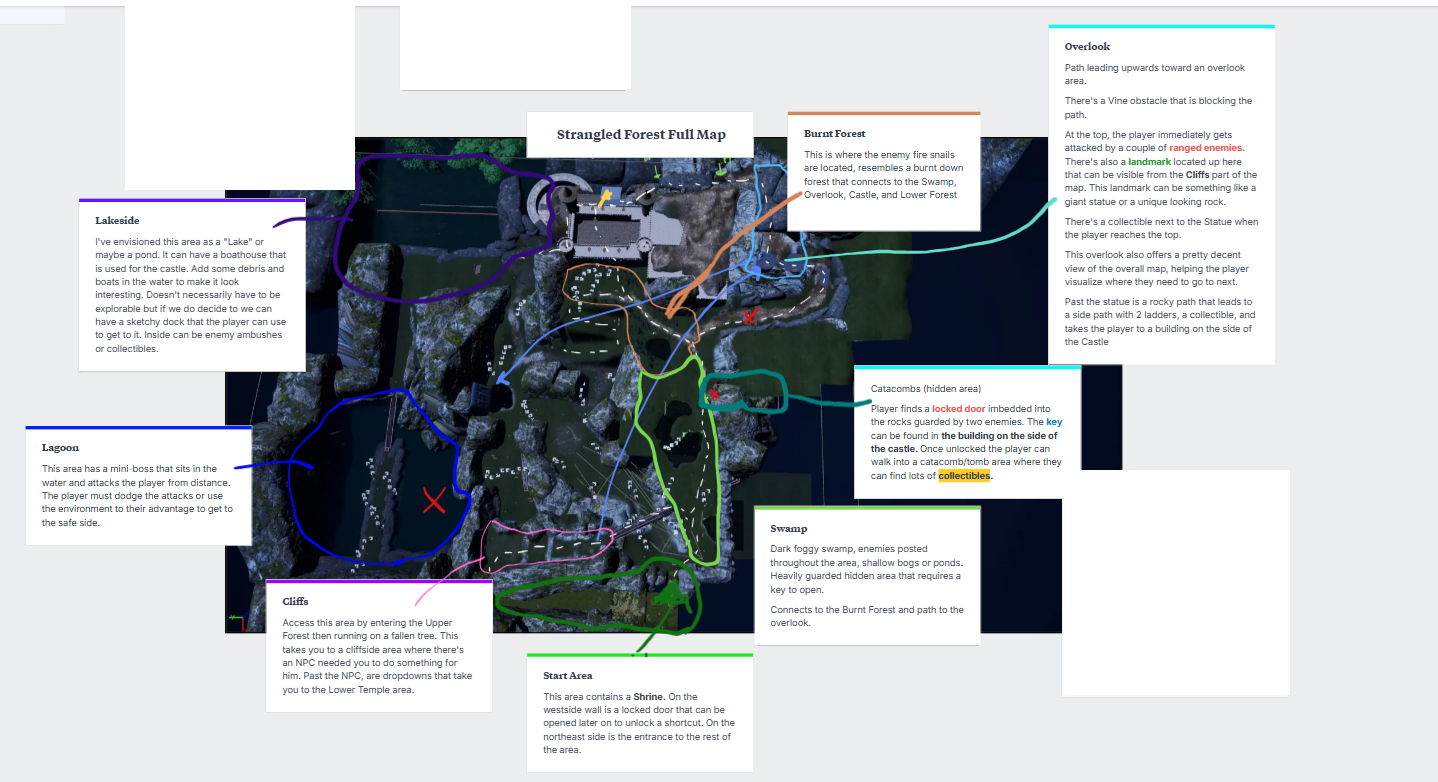
2D Level Layout Full Map Finalized Layout
This is the most recent full-map layout for the Strangled Forest, excluding the underground sections. To improve accessibility and keep the team aligned during active development, I brought the layout into Milanote to make it easier for collaborators across disciplines to reference and contribute to as the level continued to evolve.
This iteration captures the interconnected loop structure at the heart of the level's design. The player path is mapped out in full, illustrating how multiple routes weave together to create a sense of exploration and discovery while minimizing backtracking, a core pillar of the soulslike experience.
Each zone also includes a written description directly on the map, communicating the intended atmosphere, encounters, and key moments for that area, ensuring everyone on the team shared the same vision before implementation began.
Blockout Phase
Final Phase
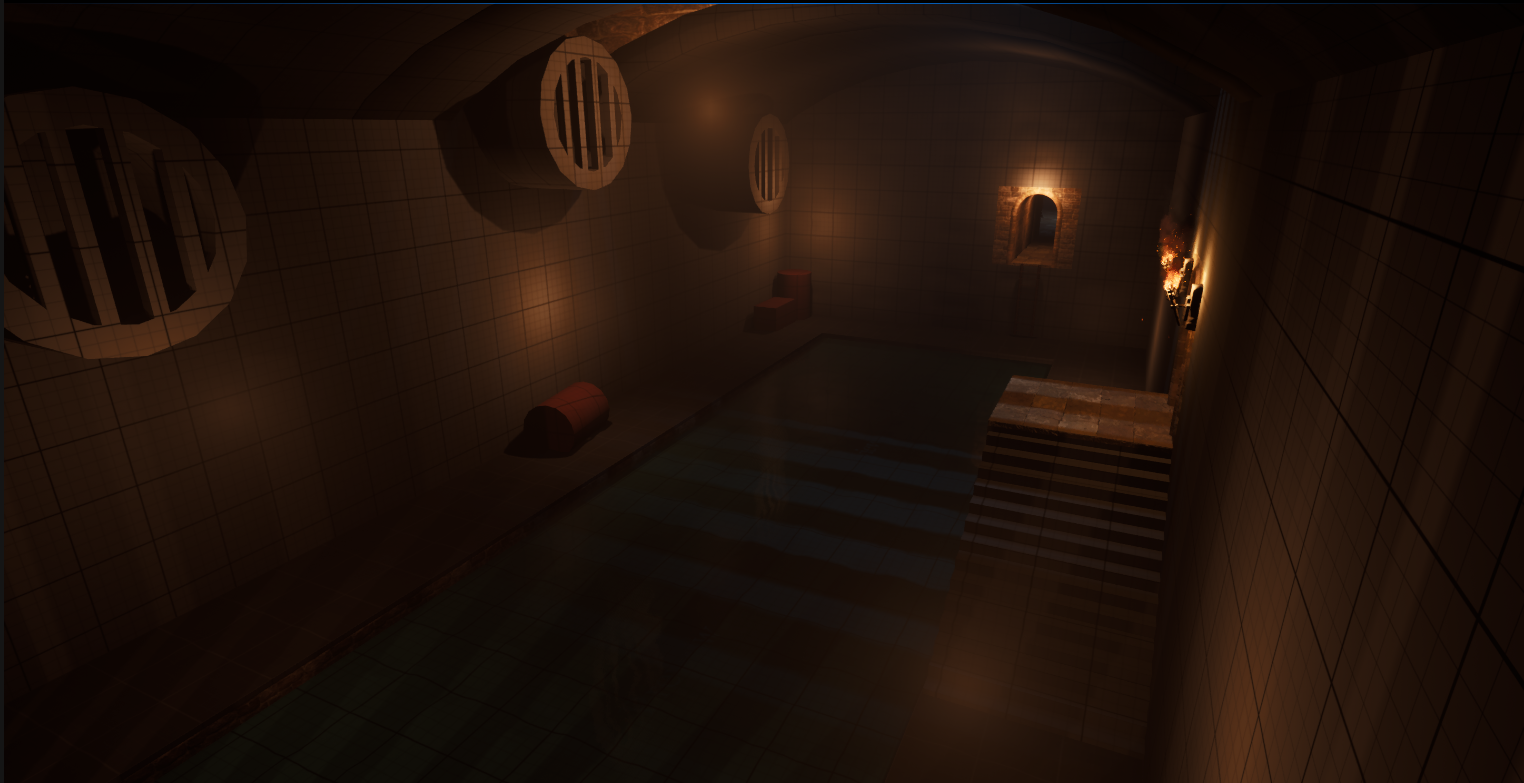
Underground Sewer Blockout
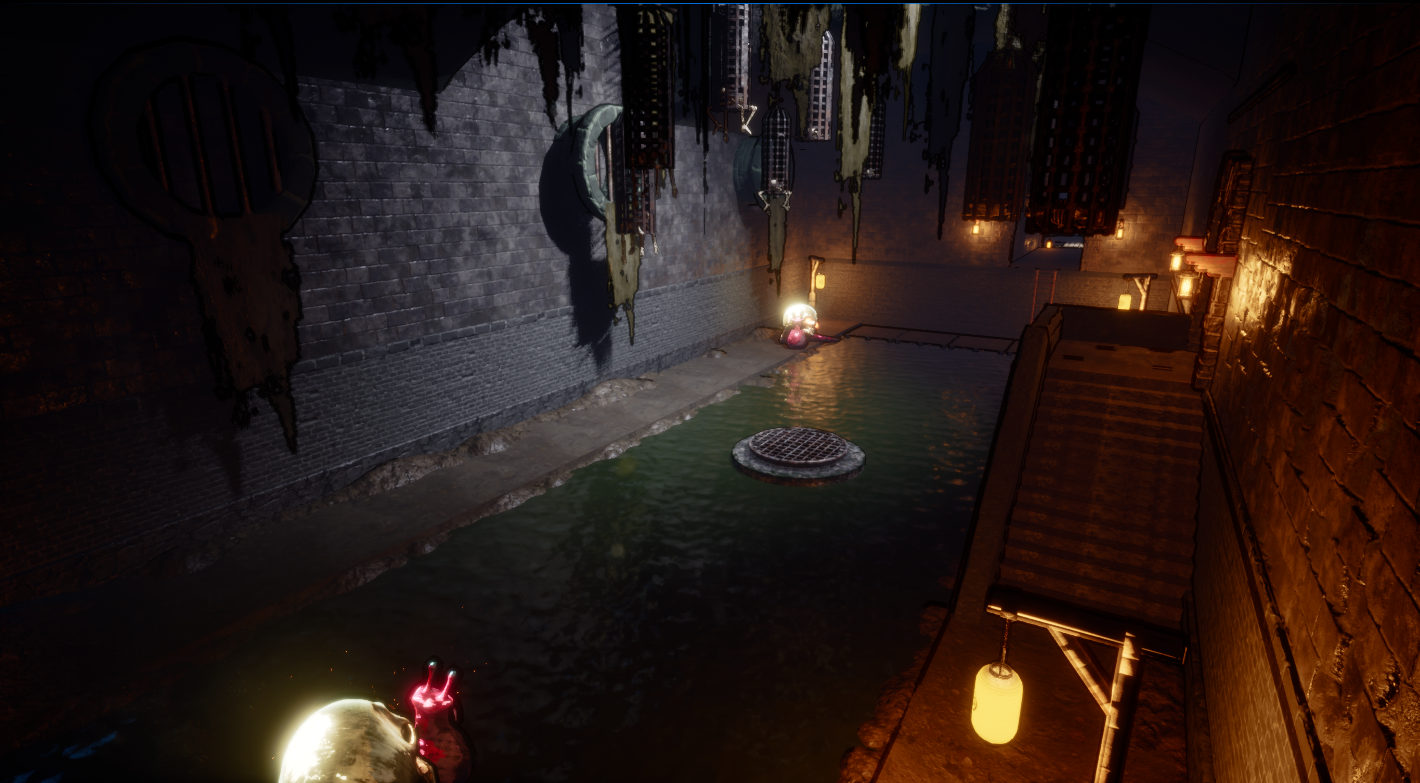
Underground Sewer Final
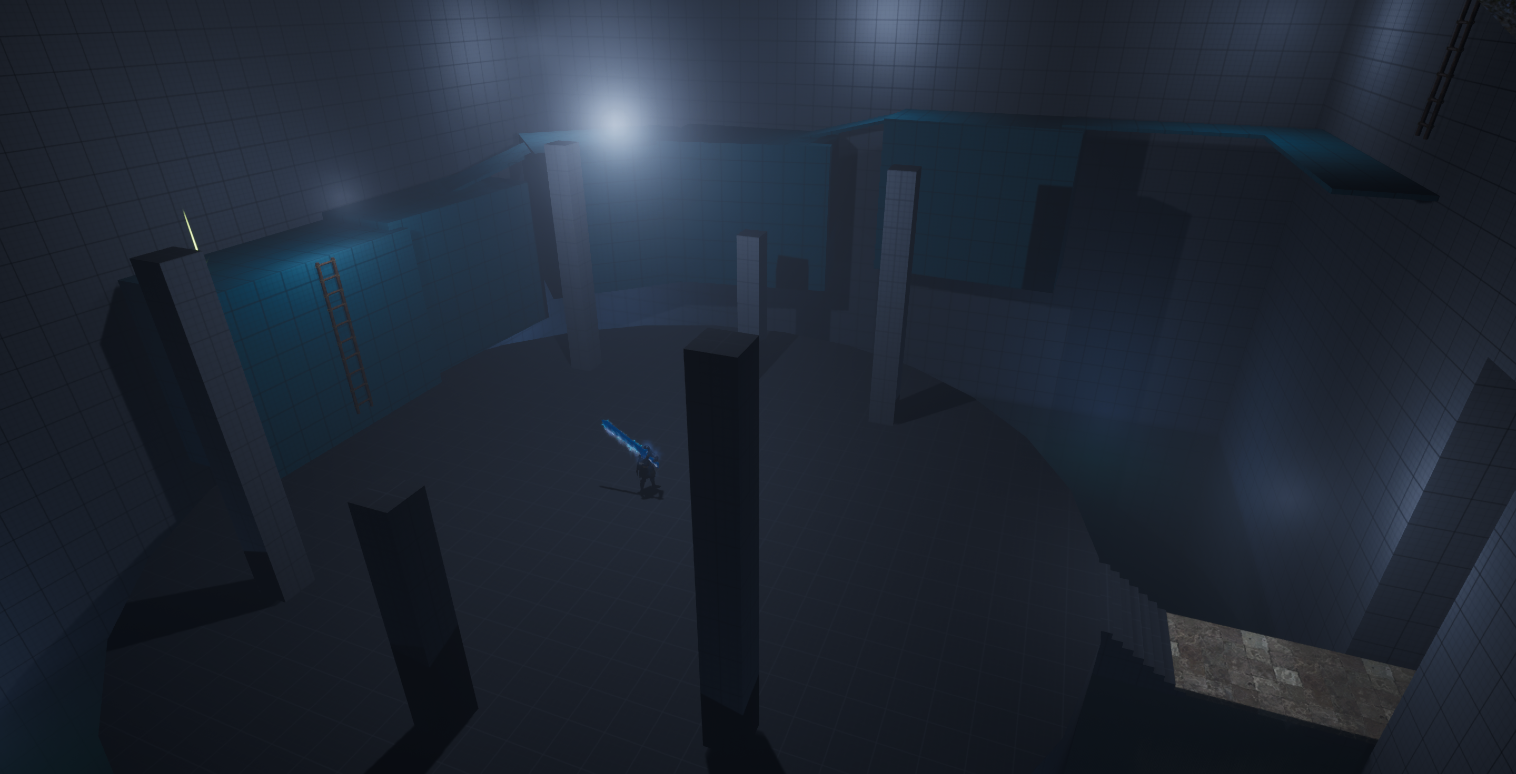
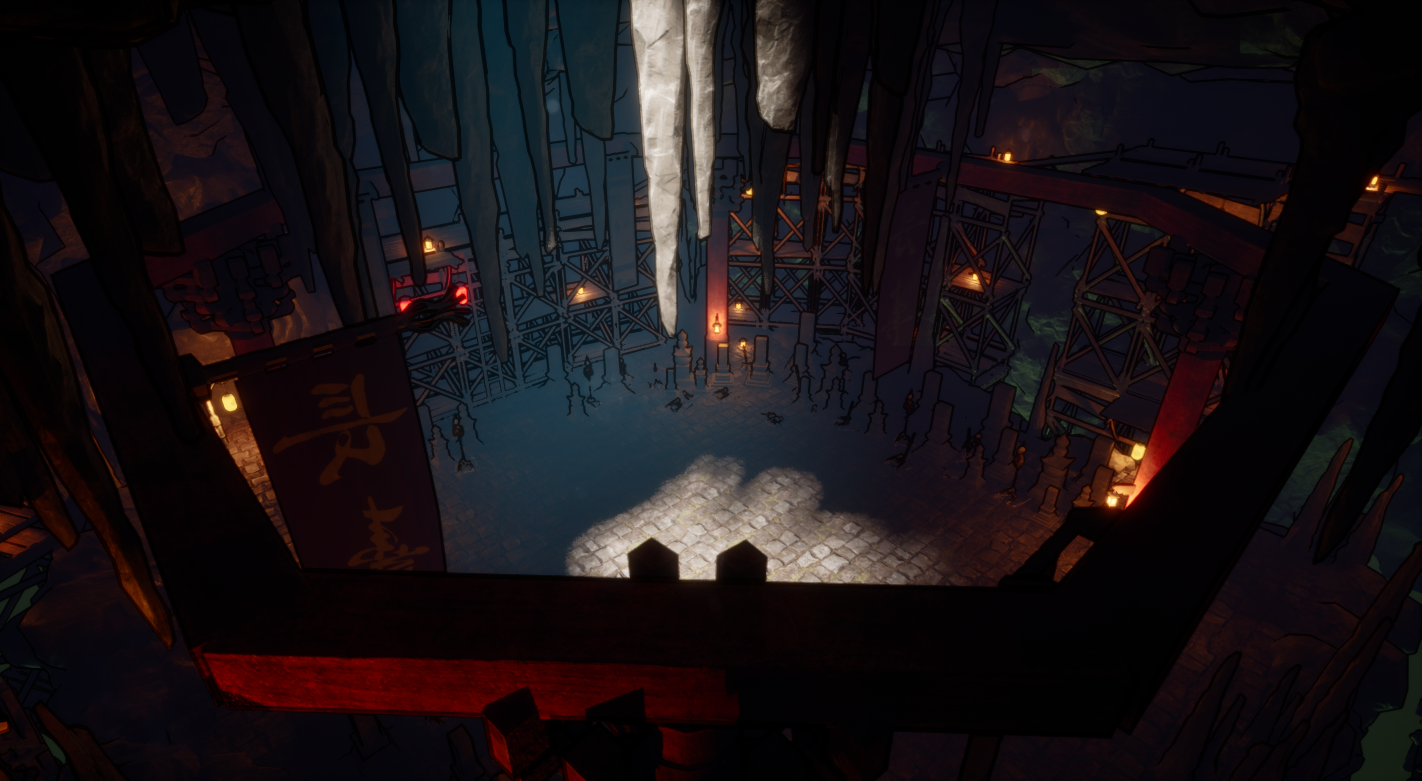
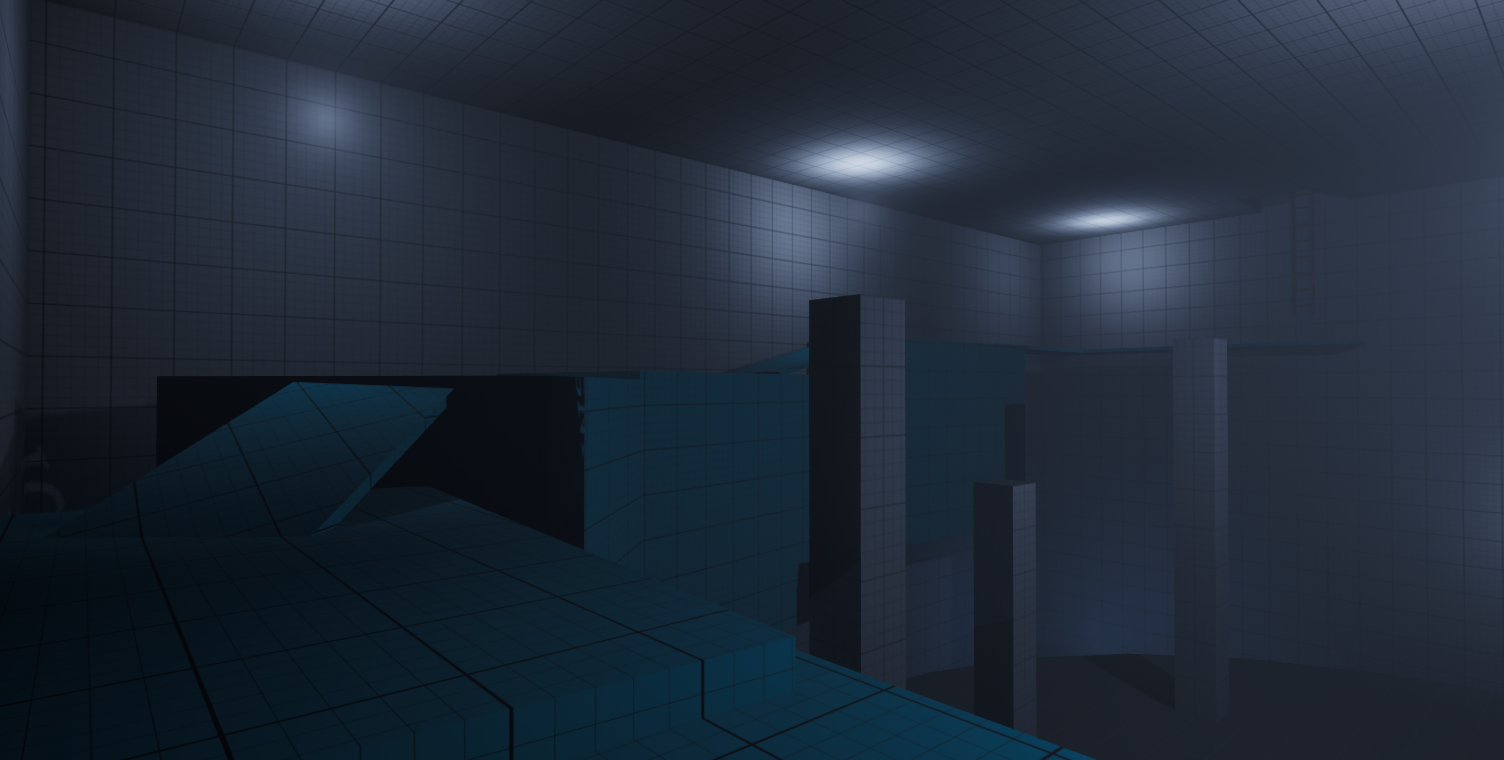
Mini-Boss Arena Blockout
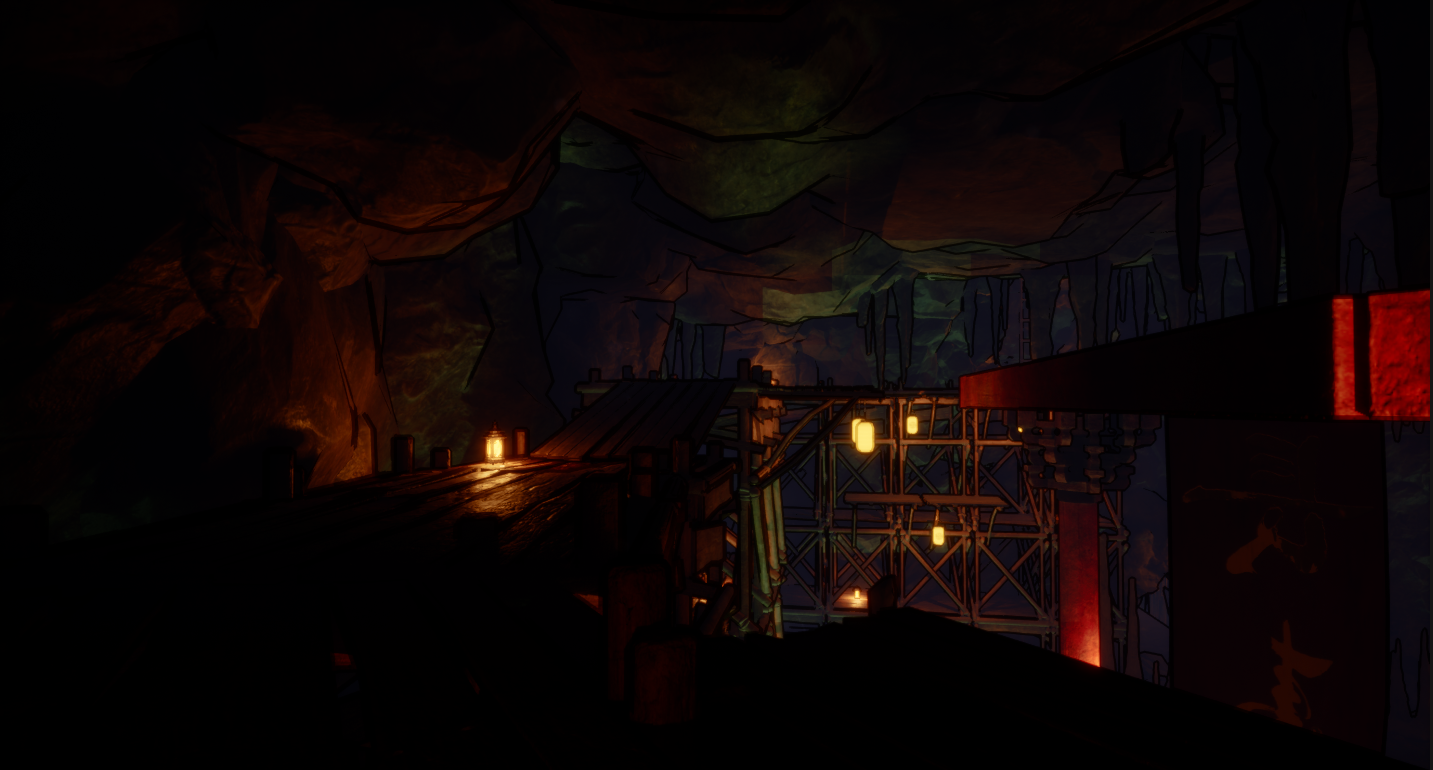
Mini-Boss Arena Final
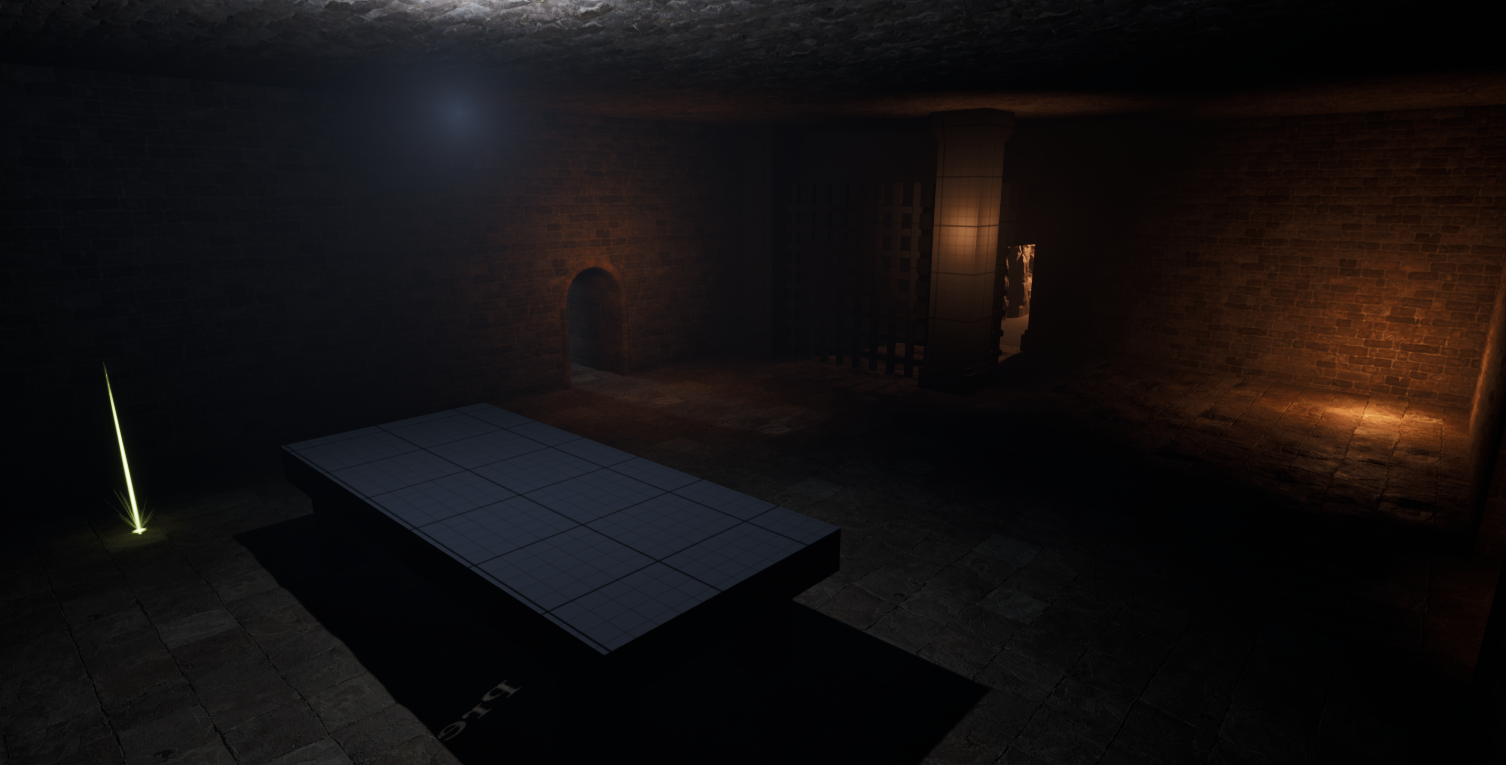
Torture Room Blockout
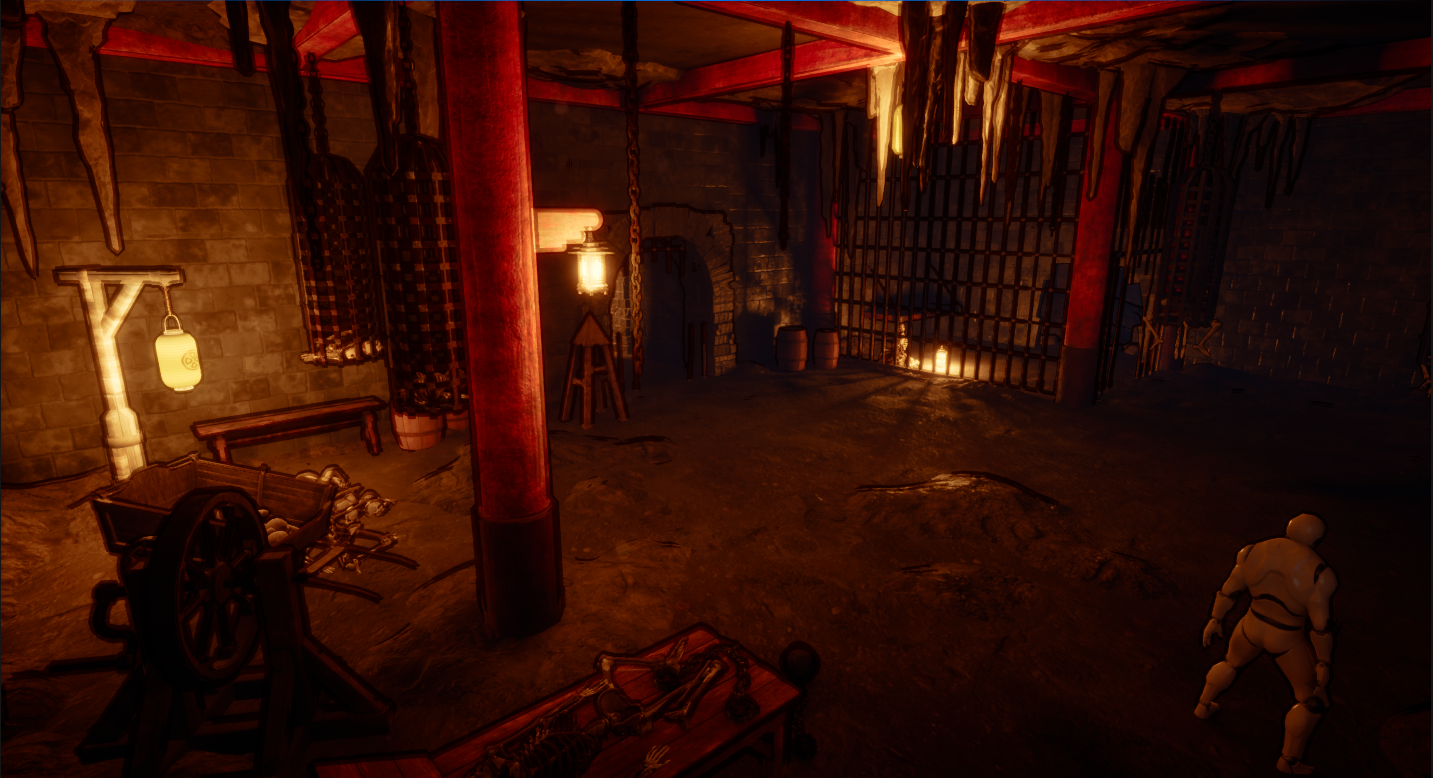
Torture Room Final
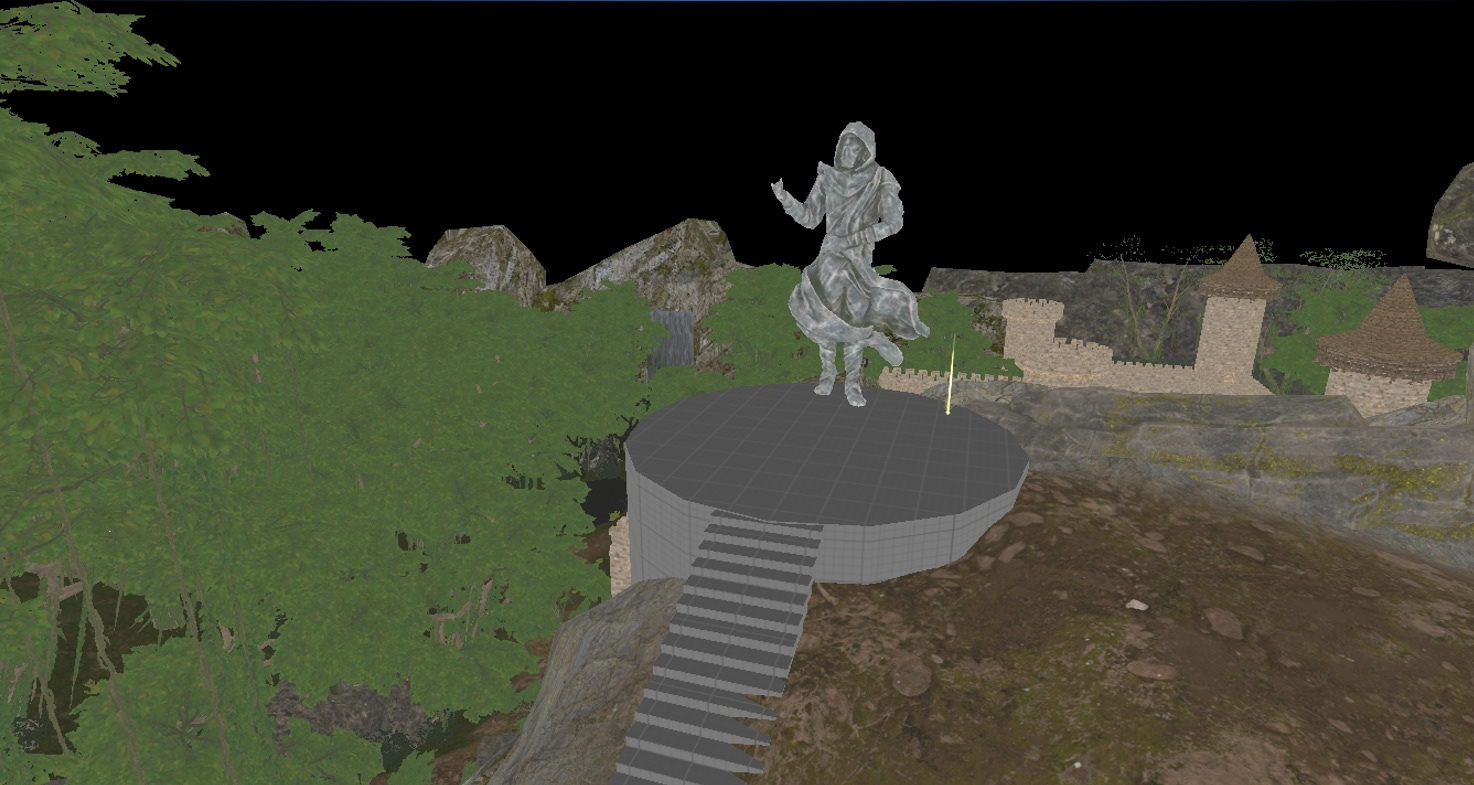
Overlook Blockout
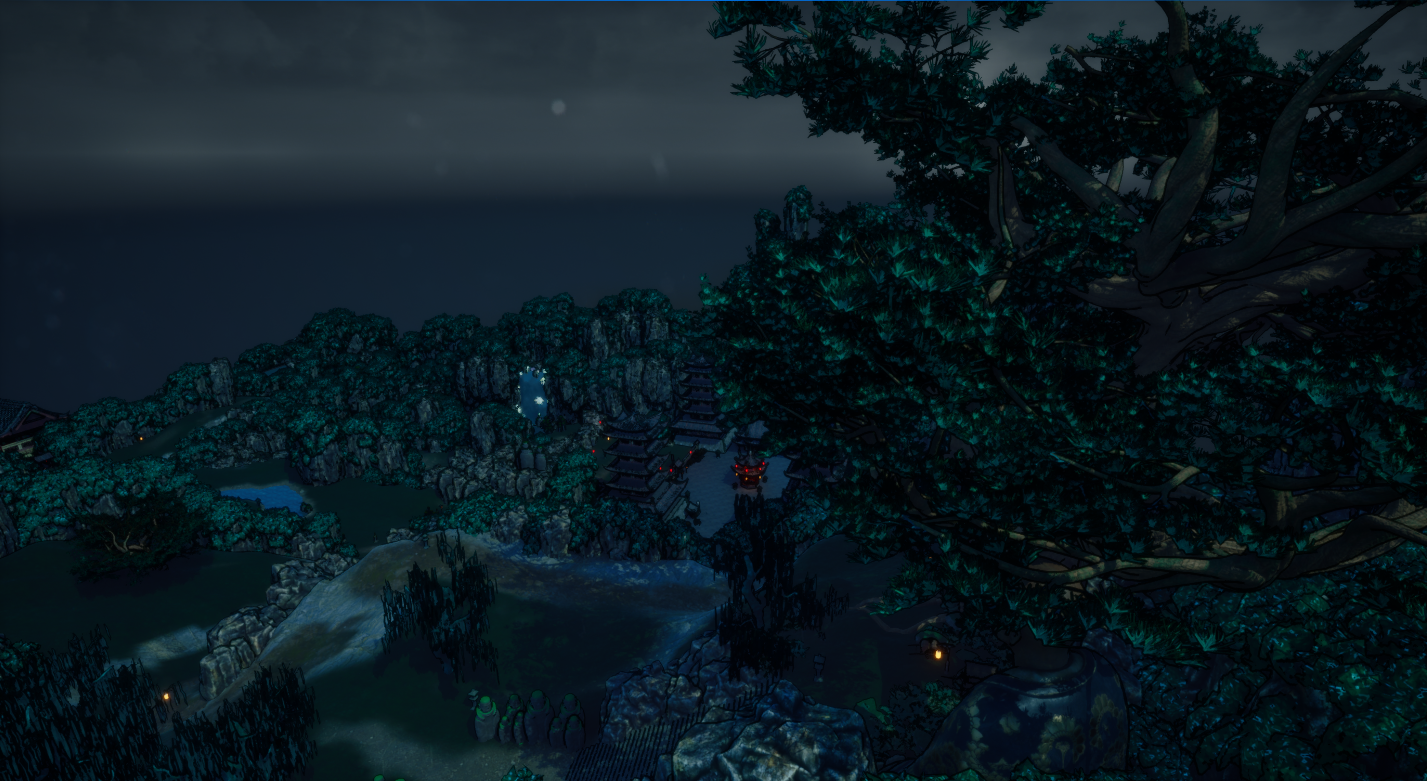
Overlook Final
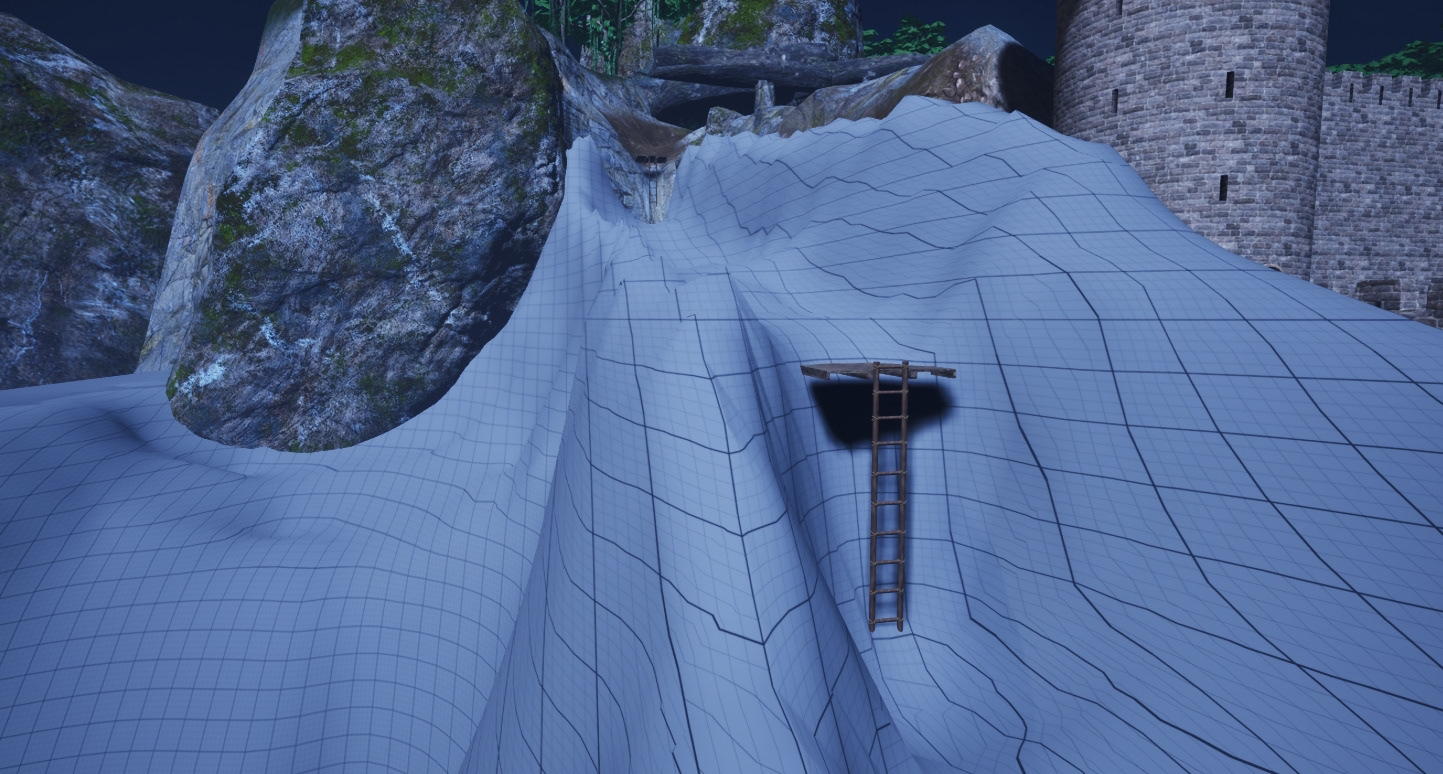
Outer Landscape Blockout
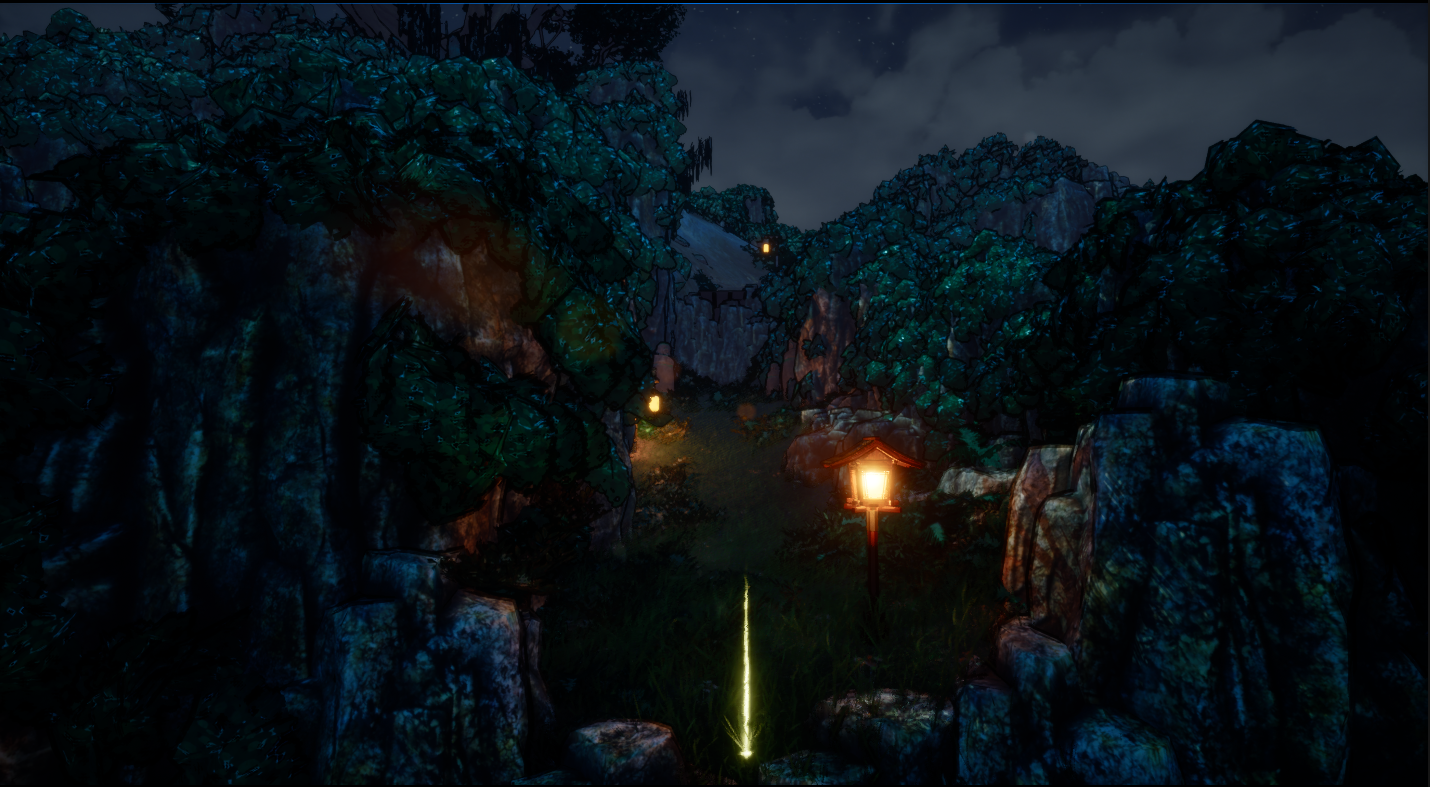
Outer Landscape Final
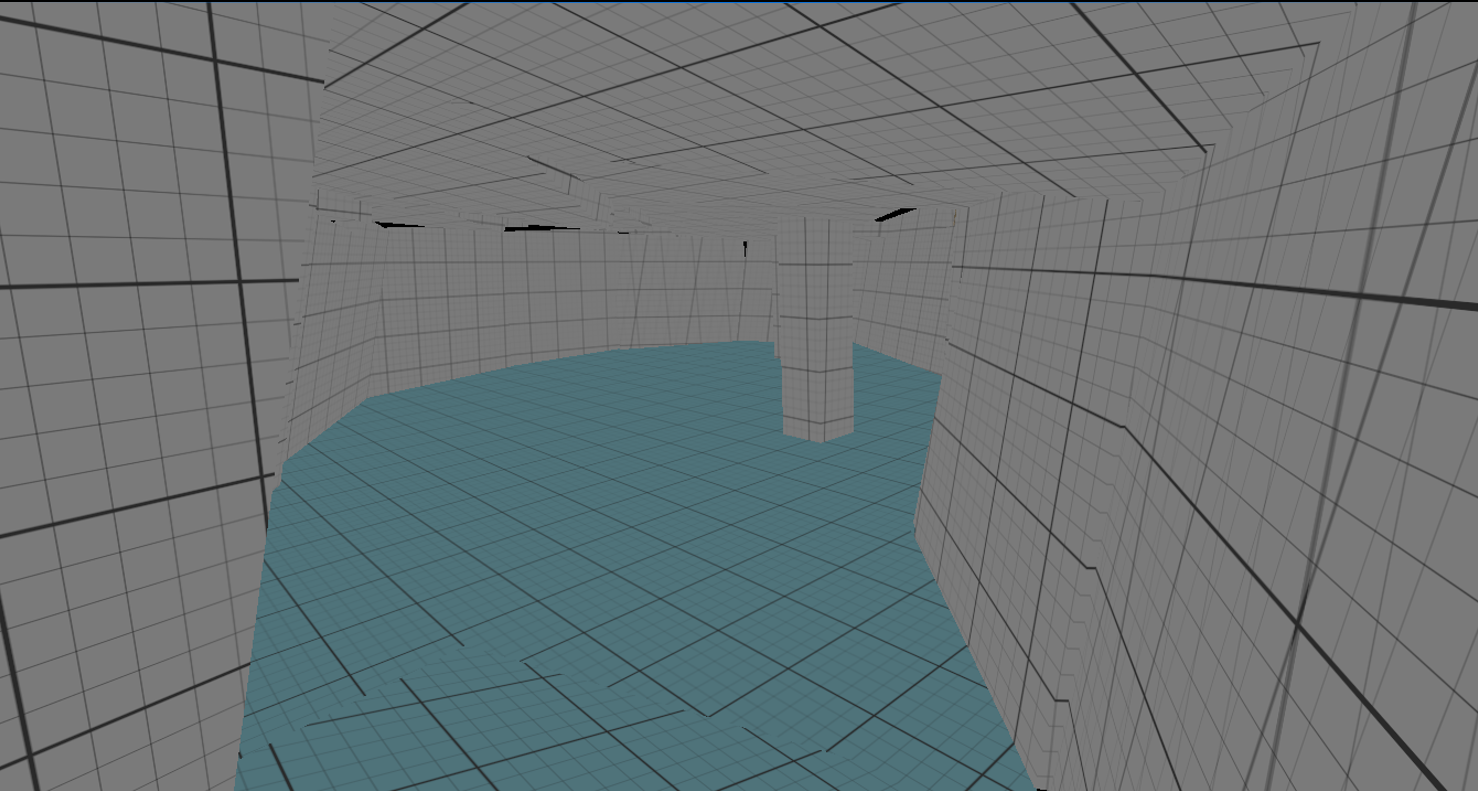
Cave Blockout
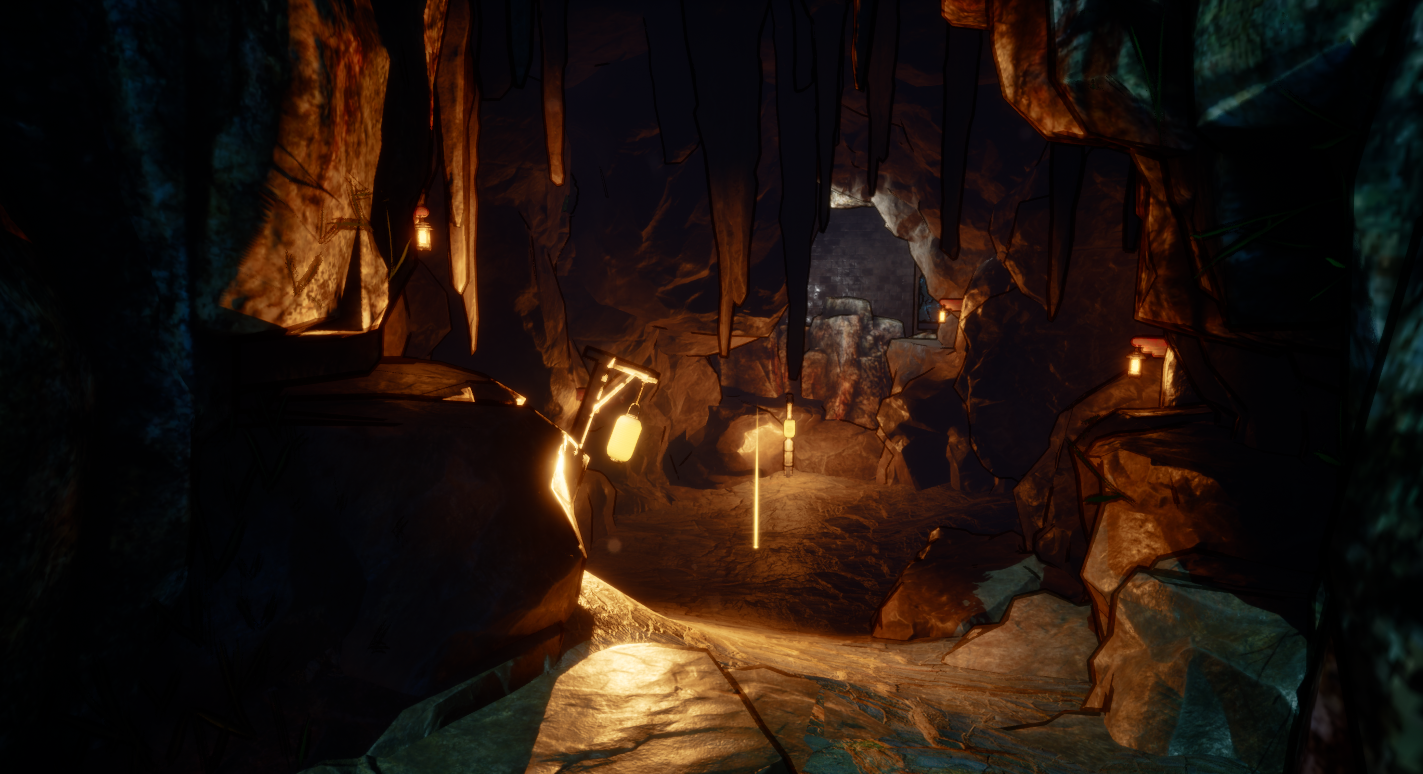
Cave Final
Reflection
Reflecting on the Strangled Forest, I'm proud of how the loop structure came together, the interconnected paths landed exactly where I'd intended, and the design goals I set at the outset felt genuinely realized in the final product. Seeing the art team bring the space to life only reinforced that, their work elevated every design decision and made the level something I'm confident putting at the front of my portfolio.
That said, the most valuable lesson this level taught me was the importance of a full blockout from day one. Because the Strangled Forest was partially built when I joined, I was designing around existing geometry rather than building from a clean state. Going forward, I prefer to blockout a level completely before any set dressing begins, it gives me the freedom to test gameplay scenarios, validate flow, and make structural changes early when the cost of iteration is lowest.
Level 02 - Tutorial
Summary
Introduce core mechanics through hands-on play, building player confidence gradually and culminating in a satisfying, earned combat encounter.
Design Goals
Core Mechanics: Teach core traversal, combat, and survival mechanics with minimal UI.
Spacing: Space mechanics using Teach -> Practice -> Master pacing.
Buffer Spaces: Maintain forward momentum with natural buffer spaces.
Confidence Building Combat: End with a confidence-building validation fight.
Play, Not Instruction: Ensure the tutorial feels like play, not instruction.
Process
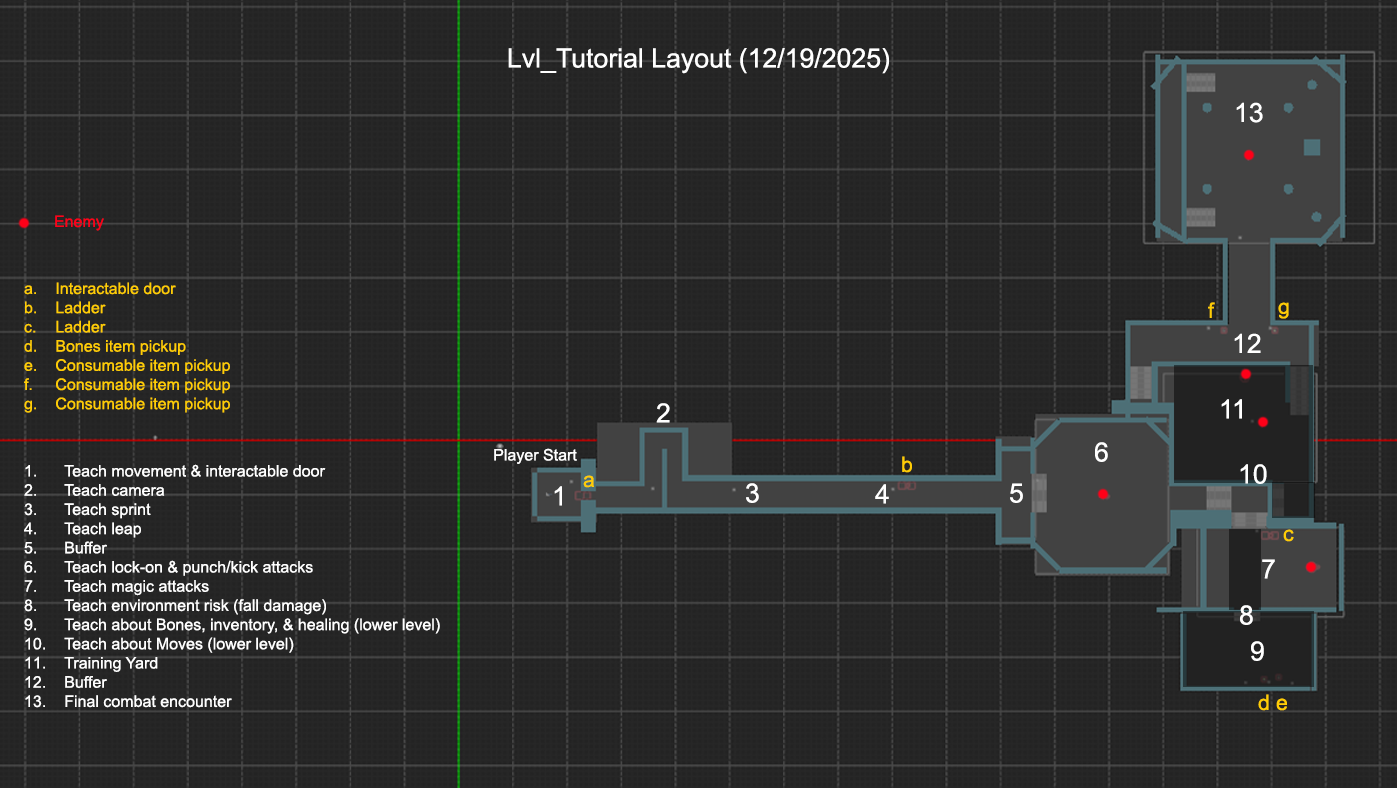
2D Level Layout
Compared to the Strangled Forest, this layout is intentionally lean, a shorter, more linear structure that reflects the level's purpose as an introduction to the game's core systems.
The white text annotations mark the level beats, mapped out deliberately to maintain a steady pace without overwhelming the player. Spacing was everything here, back-to-back lessons would have created cognitive overload, so buffer moments were built into the flow to give the player room to breathe and internalize what they'd just learned.
Yellow text indicates interactable placements, distributed throughout the level as rewards for forward progress rather than clustered in any one area, reinforcing exploration as a habit early on.
The level closes on its most demanding combat encounter, designed to consolidate everything the player has practiced up to that point. The challenge was calibrating the difficulty carefully, demanding enough to feel like a genuine test, but never so punishing that it undermines the confidence the level spent its entire runtime building. This is still a tutorial space, and the player should leave it feeling capable, not defeated.
Level Breakdown
01 - Traversal & Flow
Mechanics Taught: Movement, Camera, Sprint, Leap
Design Intent: Sequence of short traversal beats, each introducing or reinforcing a movement mechanic
Gameplay Notes: Single critical path, clear visual landmarks, forced but safe usage of sprint and leap, no enemies or fail states
02 - Targeting & Basic Combat
Mechanics Taught: Lock-On, Punch / Kick Attacks
Design Intent: Introduce combat fundamentals with minimal pressure
Gameplay Notes: Slow, low-damage enemies, lock-on is functionally required to land hits, large arena encourages repositioning
03 - Power & Environmental Risk
Mechanics Taught: Magic / Elemental Attacks, Fall Damage (implicit)
Design Intent: Expand combat options and introduce risk without punishment
Gameplay Notes: Enemy favors mid-range engagement, small fall causes damage but leads to recovery space
04 - Resources & Survival
Mechanics Taught: Bones, Inventory, Healing
Design Intent: Teach survival systems when the player needs them.
Gameplay Notes: Guaranteed chip damage before this area, safe zone immediately afterward, one-time UI prompt only
05 - Expression & Mastery
Mechanics Taught: Advanced Moves / Combos (optional)
Design Intent: Reward curious players without blocking progression
Gameplay Notes: Training dummy or weak enemies, optional prompts, skippable mastery
06 - Validation Encounter
Mechanics Tested: Traversal, Lock-On, Melee & Elemental, Healing, Environmental Awareness
Design Intent: Provide a satisfying payoff and confirm player readiness
Gameplay Notes: No new mechanics, fair difficulty
Reflection
This level came together quickly under a tight timeline, so early blockout documentation wasn't captured, something I've since made a point to build into my process regardless of scope or schedule.
Despite the pace, I'm proud of how this level turned out. The compressed timeline pushed me to sharpen my documentation instincts, as the breakdown above reflects, I prioritized complete clarity at every stage. With a level this mechanically focused, precise communication mattered more than ever; every beat, buffer, and interactable placement needed to be legible to the team without relying on environmental context to carry the meaning.
Level 03 - Forbidden Cemetery
Summary
Shorter than the Strangled Forest but considerably more demanding, this level was designed to test the player's accumulated skills in a more compressed, high-pressure environment.
The central design focus was multi-path navigation, offering the player several routes to the end goal, each carrying its own risk profile. Whether through enemy density, scarce resources, or traversal challenges, no two paths ask the same thing of the player, giving agency back to them while ensuring every choice carries weight.
Design Goals
Teach Advanced Mechanics: Continue teaching the player about more advanced mechanics (moves, bones, inventory, etc.)
Elemental Powers: Showcase elemental powers and learn how they can be used
More Challenging Combat: Tougher enemies, clustered enemies, environmental hazards
Interconnectedness: Connect paths and determine which path is the right one for any playstyle
Challenging Boss Fight: Tough boss fight but doable
Process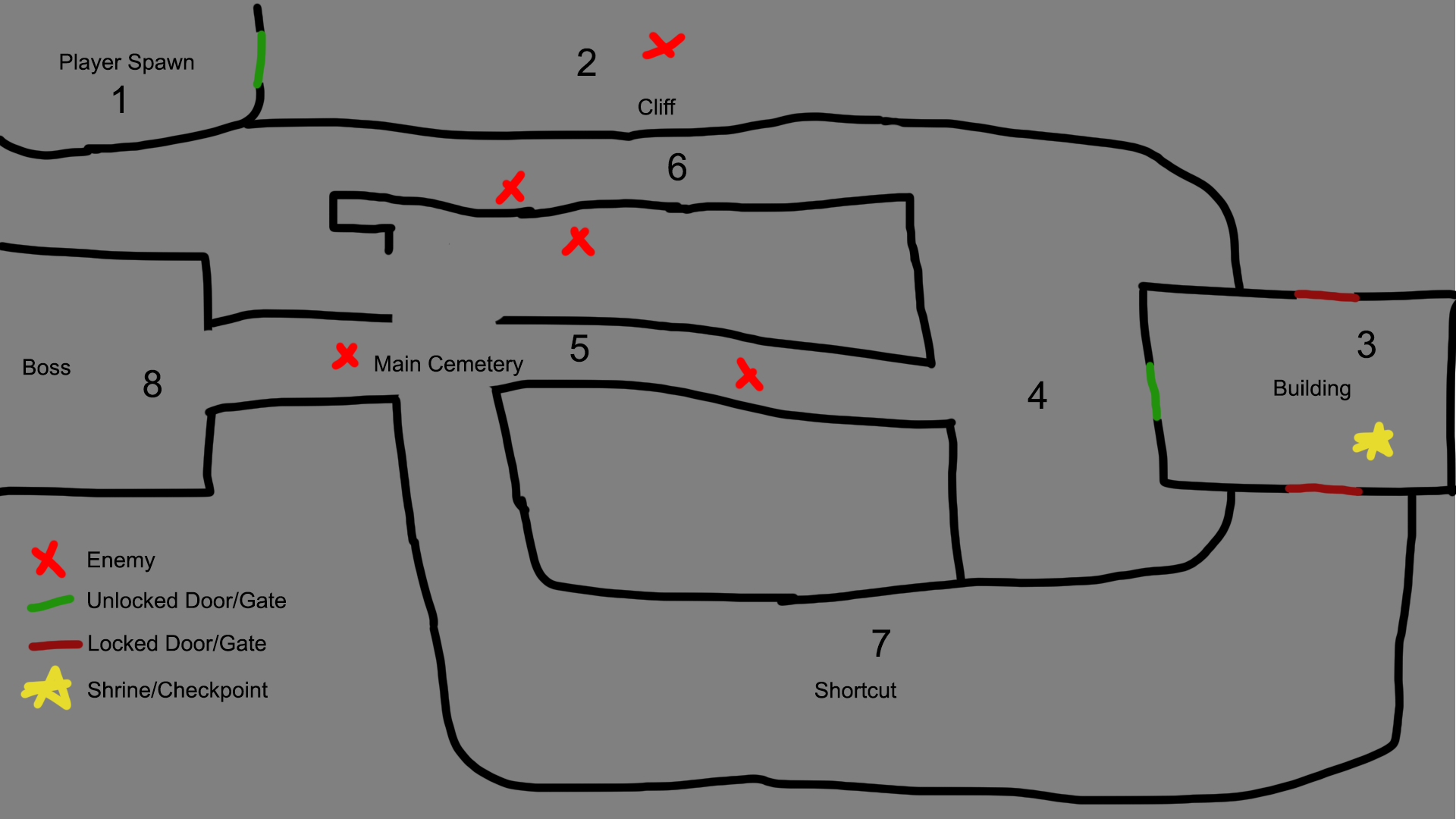
2D Level Layout (version 1)
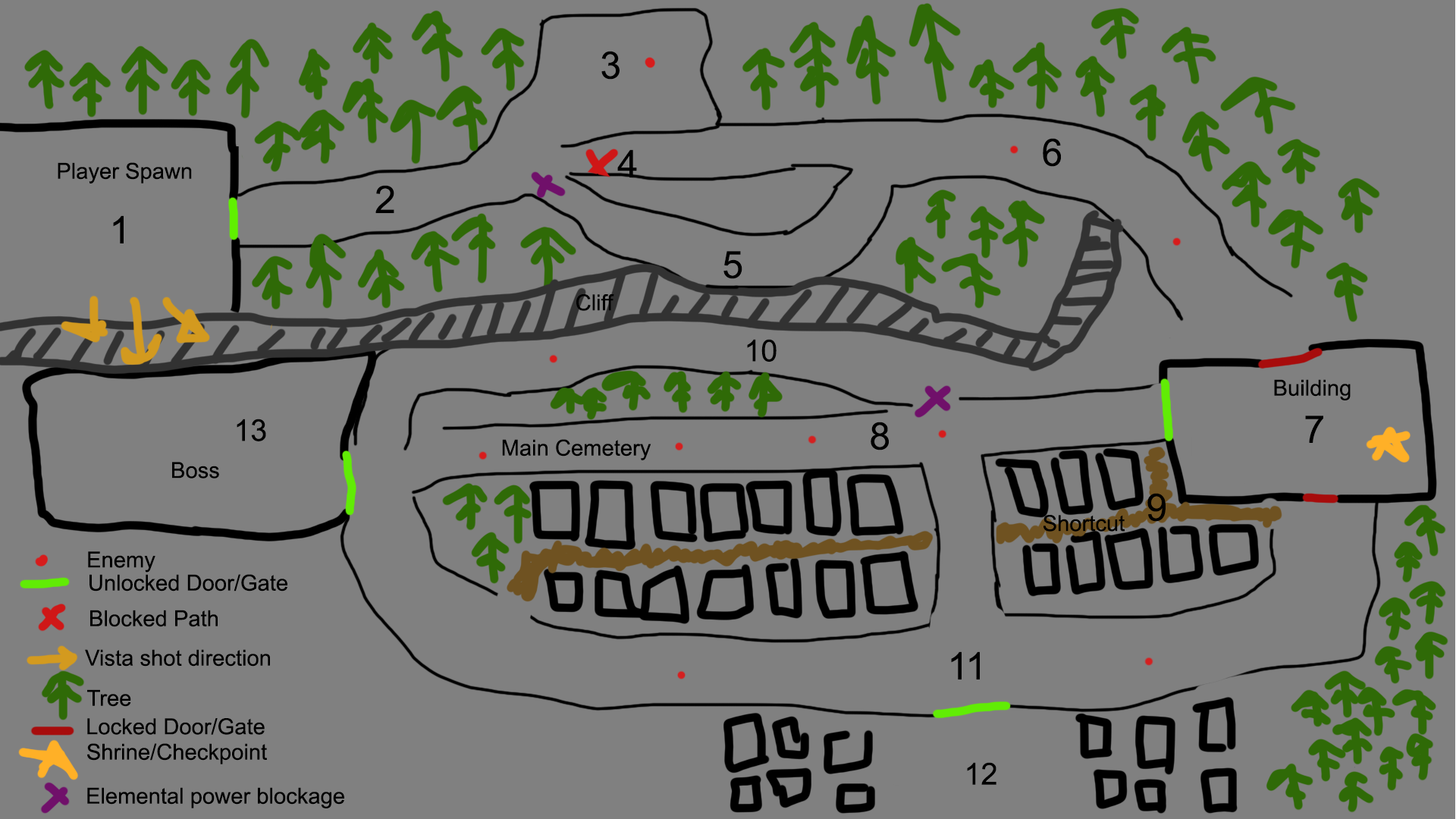
2D Level Layout (version 2)
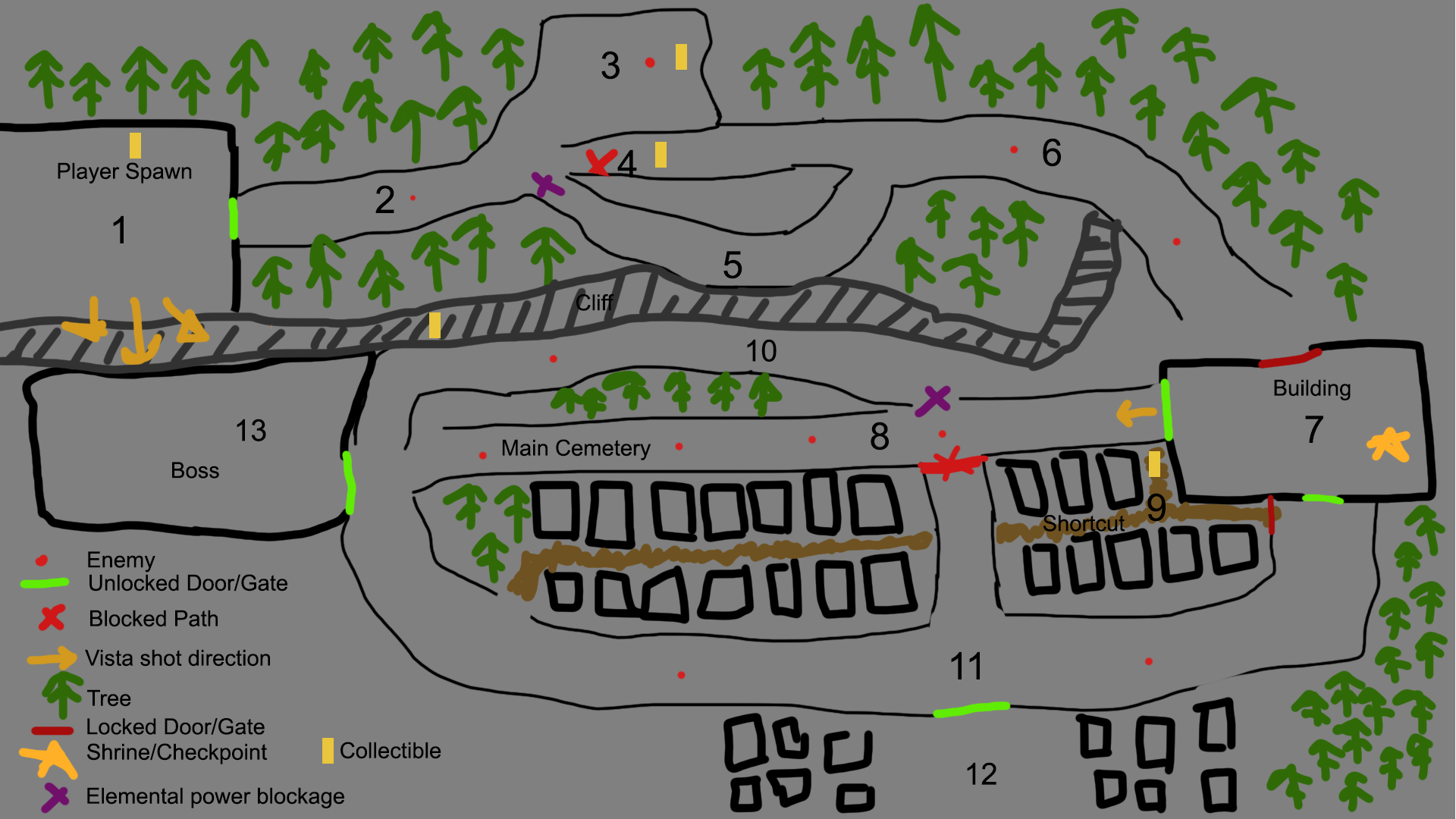
2D Level Layout (version 3)
The Forbidden Cemetery was my first level built entirely from scratch. A clean slate that gave me the freedom to apply everything I'd learned from previous levels without inheriting existing geometry or constraints. The layout grew organically through ongoing collaboration with the team, with elements added and refined as design discussions shaped the vision.
The level opens with intention. The player begins atop a cliff, greeted by a vista that reveals the cemetery sprawling below before they descend into it. That opening moment was designed to do two things at once: orient the player spatially and build anticipation for what's ahead.
From the earliest iterations, the layout was anchored around a three-lane structure, with each lane offering a distinct difficulty profile. Rather than relying solely on enemy placement to communicate challenge, difficulty scales across the lanes through enemy density, composition, and pressure giving layers a meaningful choice in how they want to engage the level and rewarding those who seek out the harder path.
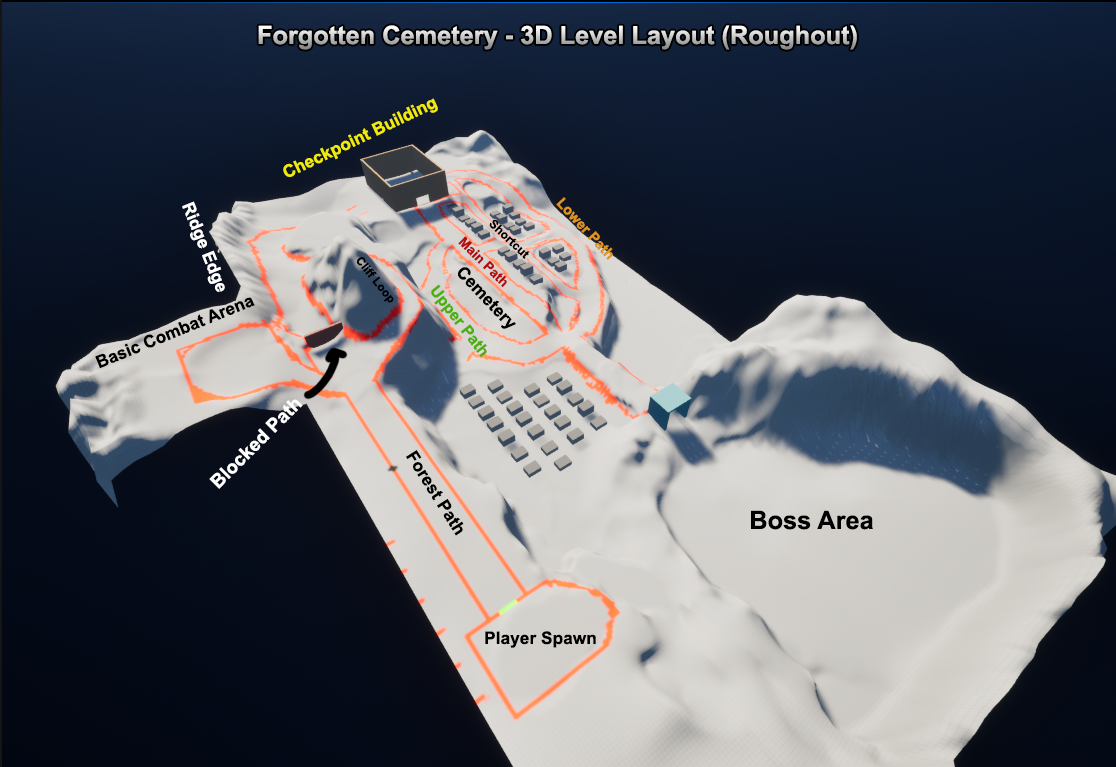
With the layout established, I moved into UE5 to begin the roughout. I started by shaping the landscape itself, sculpting the mountain and descent first, then the cemetery grounds and the central structure, building the level's geography from the top down before committing to anything else.
Once the terrain felt right, I painted zone outlines directly onto the landscape to map out the player's path within the engine. This step was invaluable, it let me visualize flow, validate scale, and assess pacing in context without placing a single asset. Any structural issues with the layout could be identified and resolved at the cheapest possible stage of production, before set dressing or encounter work had begun.
Reflection
While the Forbidden Cemetery is still in active development and currently in the blockout phase, it represents one of the most rewarding levels I've worked on. Building entirely from scratch sharpened my process in ways the earlier levels couldn't, and discovering the terrain painting technique as a bridge between 2D layouts and the engine environment was a genuine breakthrough in how I approach the roughout stage going forward.